
The City of Langley is undergoing more transformation right now than at any point in recent memory. A new zoning bylaw is in effect, the Langley Mall is headed for a complete overhaul a five-minute walk from the SkyTrain station, and construction on Langley City Centre Station itself is now underway. Here is what changed in May and June 2026, and what it means if you own land or are planning to build in the City.
The City of Langley adopted its new Zoning Bylaw 3300 on March 9, 2026, completing a full overhaul of the rules governing how land in the city can be developed. If you are building in Langley City, several new requirements now apply from the permitting stage onward.
In Transit-Oriented Development areas, new townhouse and apartment projects must include 2.5 percent of residential floor area as affordable rental units, priced at 20 percent below local market rental rates. Developers who prefer not to provide those units on-site can pay a cash-in-lieu contribution into the City’s affordable housing fund. New apartment buildings must also make at least 5 percent of their units three bedrooms or larger - a requirement aimed at keeping family-sized housing available in a city where one- and two-bedroom units have historically dominated new supply.
On the infrastructure side, every residential parking space in new buildings must be wired for Level 2 EV chargers, with 10 percent of spaces having chargers installed at the time of construction. The Province set a housing target for Langley City requiring 1,844 net new homes completed between August 2024 and July 2029. The new zoning bylaw is the City’s direct response to meeting that mandate while maintaining control over what gets built and how.
Jay’s Take:
These requirements are manageable, but they are still real costs. On smaller sites, affordable rental contributions and EV infrastructure can affect whether the project works, so they need to be included from the beginning, not added later.
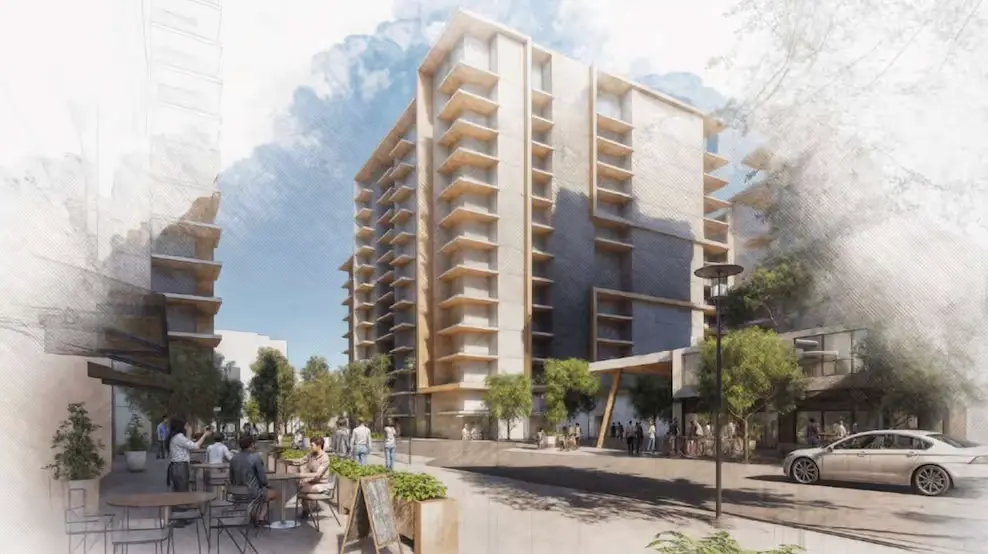
The Langley Mall at 5501 204 Street is headed for one of the most significant redevelopments in the City’s history. Cedar Coast, which acquired the nine-acre site from First Capital REIT, is working with Orion Construction and Integra Architecture on a master-planned project that would replace the existing mall with 10 buildings ranging from 12 to 14 storeys, approximately 1,900 residential units, and about 122,000 square feet of commercial space.
The proposal seeks to rezone the site from Downtown Commercial (C1) to Comprehensive Development (CD), with a proposed density of 4.43 FSR, below the 5.5 maximum already envisioned in the City’s OCP for this site. The rezoning bylaw reached third reading on February 10, 2025 and is awaiting fourth and final reading before it can proceed to the development permit stage for individual buildings.
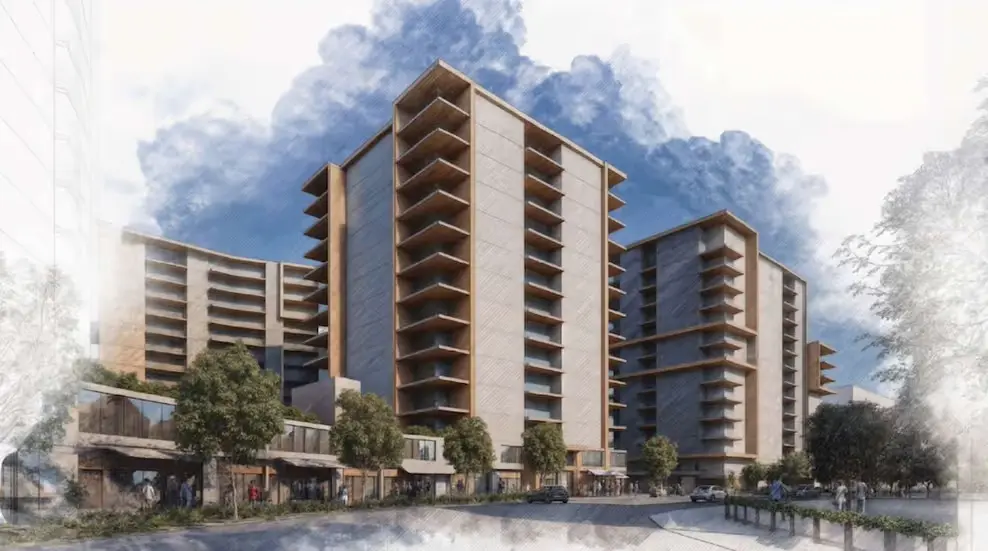
The site sits about a five-minute walk from the future Langley City Centre SkyTrain station. The redevelopment is planned in multiple phases over 20 or more years. A new road extending Park Avenue across the property would divide the site, with the six buildings north of it taking a mixed commercial and residential character and the four buildings to the south being residential only. The grocery store currently on-site is planned to relocate within the development rather than close permanently.
Jay’s Take:
This is a major signal for central Langley. The full buildout will take years, but a 1,900-unit project beside the future SkyTrain station will start affecting nearby land values long before all 10 buildings are complete.
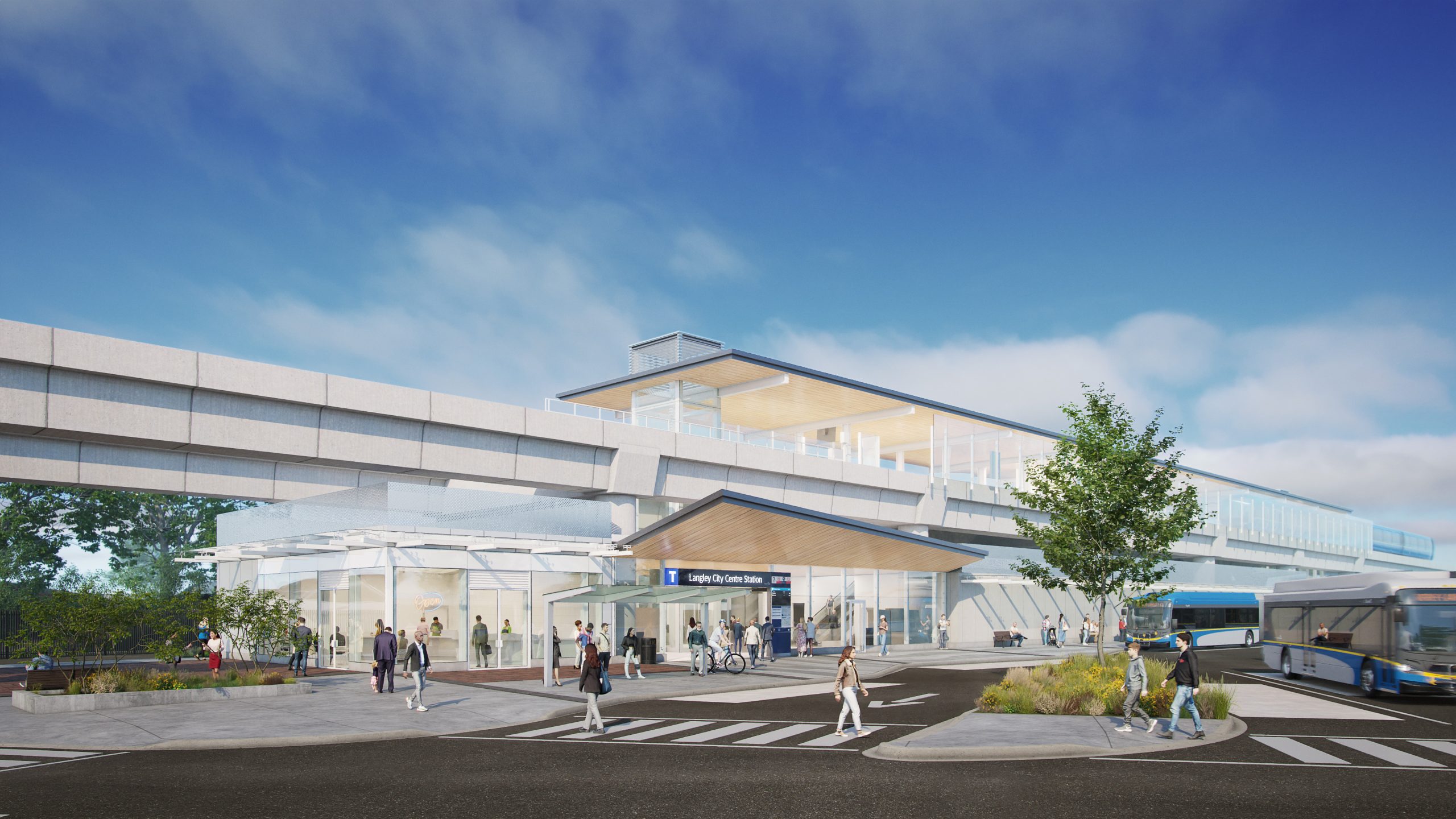
The Province announced on May 8, 2026 that construction has begun at all eight stations along the Surrey-Langley SkyTrain extension, including Langley City Centre Station, the eastern terminus of the line. The milestone shifts the project from foundation work to vertical construction across the full 16-kilometre corridor.
As of early May, more than 30 percent of the elevated guideway is complete, with five kilometres of precast concrete segments installed. Guideway columns are 75 percent built, and trackwork, the actual installation of rail, began in the last week of April 2026 for the first time. The underground duct bank carrying the electrical systems to power the line is over 75 percent complete.
The extension runs from King George Station in Surrey to Langley City Centre, funded by $4.4 billion from the Province and $1.3 billion from the federal government. At opening, the system is projected to serve 56,000 daily weekday riders, growing to 80,000 by 2050. The in-service target is late 2029, with an average commute of 22 minutes from Langley City Centre to King George Station, more than 25 minutes faster than the current bus route. Traffic disruptions on roads through the City are expected to continue through the active construction period.
Jay’s Take:
This is no longer just a future transit promise. With station construction underway, sites within walking distance of Langley City Centre Station should now be evaluated with the 2029 opening and future density in mind.
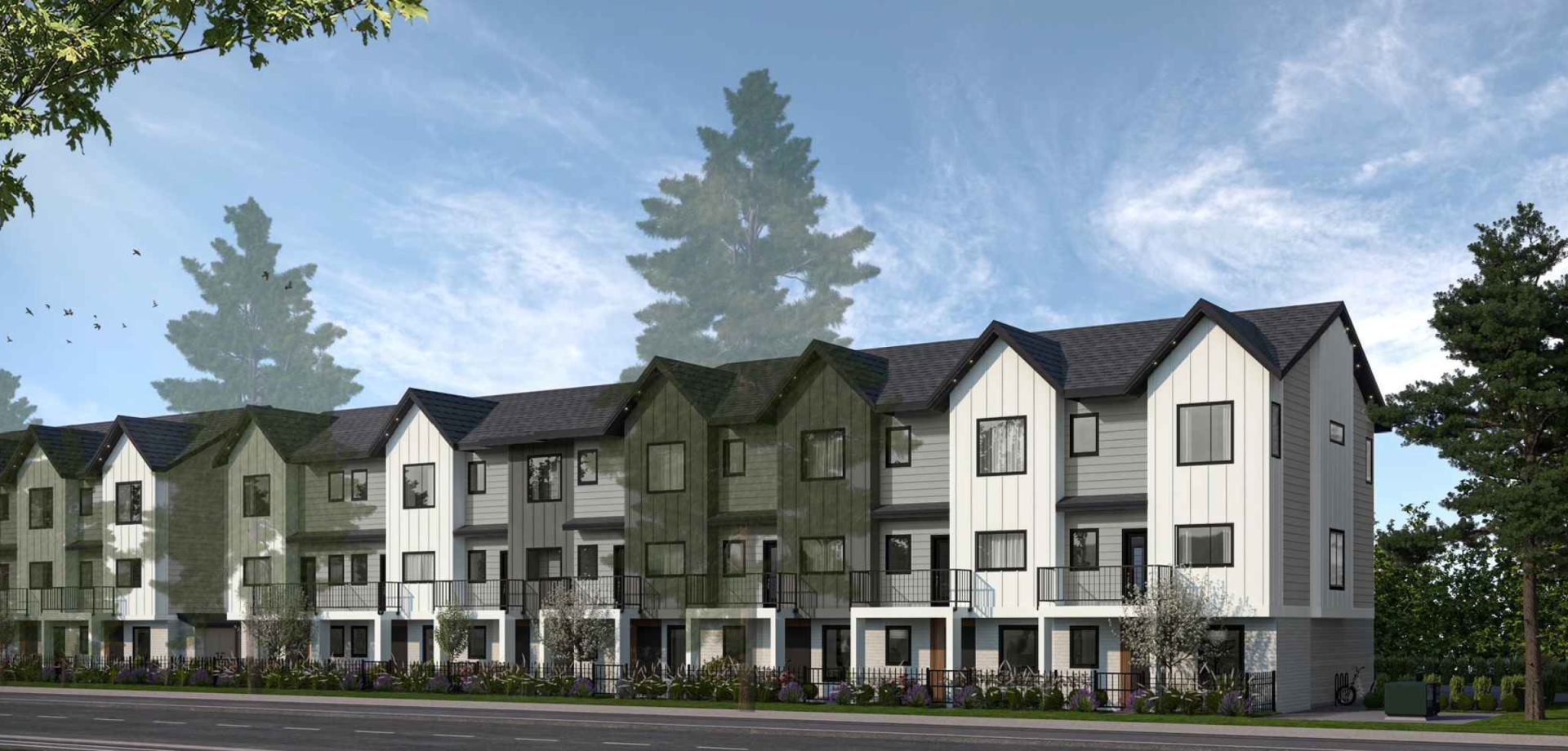
Langley City Council gave final reading in May 2026 to a rezoning for a 27-unit townhouse project at 4505-4535 200A Street, just north of Alice Brown Elementary School. The project stands out for one specific reason: every unit has three bedrooms.
That is uncommon in a market where new construction has long been dominated by one- and two-bedroom units suited to couples and individuals rather than families. The City’s new Zoning Bylaw 3300 now requires that 5 percent of units in new apartment buildings include three or more bedrooms, but this townhouse project exceeds that standard by building exclusively family-sized units.
The location near an elementary school and the all-family unit mix makes this a practical test case for what the City says it wants more of: housing that can actually accommodate the people raising children in Langley City, rather than families who are priced into the region but ultimately driven to larger-lot municipalities for more space.
Jay’s Take:
All three-bedroom townhouses are harder to make work than a mix of smaller units, so this approval is worth paying attention to. It shows that Langley City is serious about family housing, but the numbers still need to work at the site level.
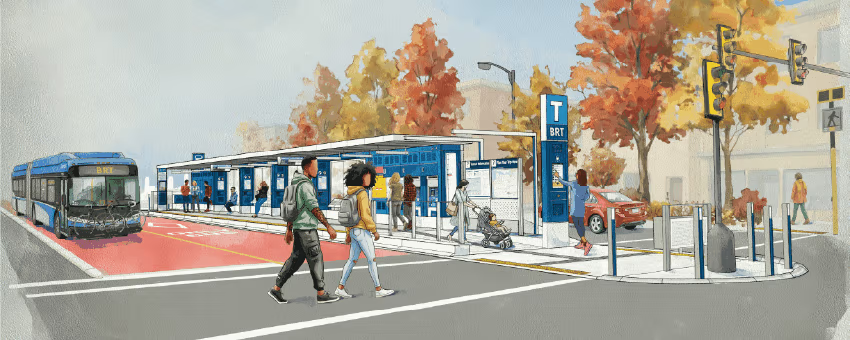
TransLink’s Bus Rapid Transit project connecting Willowbrook to Haney Place advanced in May 2026, with Langley Township council voting unanimously on May 11 to have staff work with TransLink on detailed design for the project. Langley City Council also heard a TransLink presentation on the BRT in late May, with staff reporting strong community support within the City.
The proposed BRT route would run 22 kilometres, stopping at 13 stations, with buses operating every 10 minutes during peak hours. By using dedicated bus-only lanes along approximately 62 percent of the route, combined with transit signal priority, the route is projected to cut travel times by approximately 40 percent compared to existing bus service, getting riders from Willowbrook to Haney Place in about 40 minutes.
The BRT project is currently unfunded, and roadway designs and costs have not been finalized. However, once funding is secured, BRT infrastructure can typically be built and in service within three years, a significantly faster delivery timeline than a rail extension. For Langley City specifically, improved east-west connections to Maple Ridge would complement the north-south transit link provided by the SkyTrain.
Jay’s Take:
This would be a meaningful improvement for the 200 Street corridor, but it is still unfunded. I would not put it into a pro forma yet, but owners along the route should keep watching because funding could change the value of those sites quickly.
The Langley real estate market saw volume recover in May 2026, according to Fraser Valley Real Estate Board data released in early June, but benchmark prices remained below year-ago levels across every property type, keeping conditions in buyers’ market territory.
Single-family home sales reached 90 in May, a 21.6 percent increase from May 2025. Despite that volume pickup, the benchmark price for a single-family home was $1,522,700, down 6.8 percent year-over-year. Townhouse sales of 74 units were nearly flat from April, with a benchmark of $817,100, down 5.5 percent from the same period last year. Condos saw the sharpest price softness, with a benchmark of $549,100, down 8.7 percent from May 2025.
Local realtor Joe Pratap described the spring as a “delayed market,” with financially secure buyers stepping in while first-time buyers remained on the sidelines due to economic uncertainty. Demand was strongest for affordable single-family homes and properties with rental suites. Listings continued to outpace sales across the Fraser Valley.
Jay’s Take:
Sales are improving, but prices are still soft, especially for condos. If you are underwriting a project today, your revenue assumptions should be more conservative, and the stronger demand for homes with rental suites should not be ignored.
Sources
Thinking about how these changes affect your project in Langley City? Jay Jung Architect Inc. works with developers, builders, and property owners across Metro Vancouver. Reach out at jjarch.ca or email jay@jjarch.ca.


