

New Westminster is in the middle of one of the most consequential planning years in its recent history. If you own land here, or you're watching the city as a developer or builder, three things just happened in quick succession that are worth paying attention to.
New Westminster officially adopted its Infill Housing Program in June 2026, completing a process that moved faster than most Metro Vancouver cities have managed. Following a public hearing on May 25, Council supported the bylaw amendments and the city is now among the first in the region to fully implement the Province's small-scale multi-unit housing (SSMUH) requirements.
The result: roughly 3,000 single-detached and duplex properties across the city are now pre-zoned for infill housing. About 1,900 of those properties can go up to four units as-of-right, and the remaining 1,100 properties, which are located closer to frequent transit, can go up to six units. The program covers the full range of infill forms: duplexes, triplexes, fourplexes, multiplexes, secondary suites, laneway houses, and side-by-side townhouses.
If your property sits in a low-density residential neighbourhood in New Westminster, the rezoning step for a small multiplex is now off the table. You can proceed directly toward a development permit and building permit, which cuts months and significant cost out of your project. Whether the economics pencil out still depends on your specific lot, setbacks, and construction costs, but the barrier to entry is now measurably lower.
Jay's Take:
The pre-zoning is good news, but it does not guarantee that every property can support four or six units. Servicing upgrades, construction costs, setbacks, and parking can still make a small project difficult. Before assuming the new density works, you need to test the actual site and the numbers.
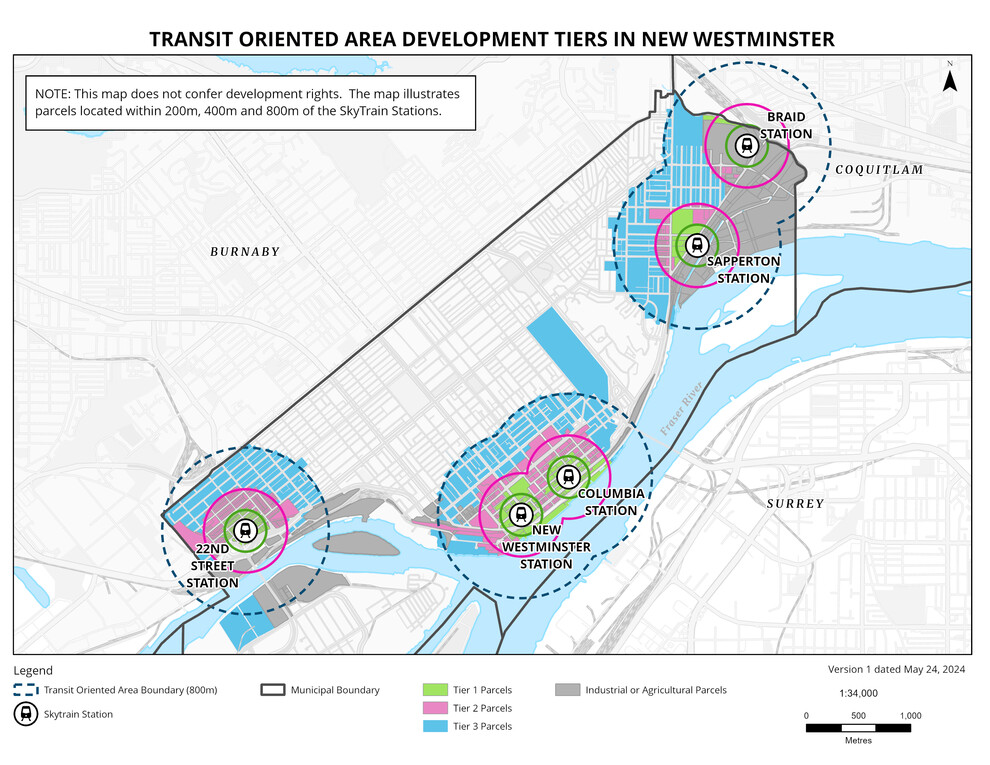
Alongside the infill program, New Westminster's Council passed OCP amendments that expand the Transit Oriented Development Area (TODA) boundaries around three SkyTrain stations: Braid, Sapperton, and 22nd Street. The change updates approximately 105 properties to a "Residential - Limited Mid Rise" land use designation, reflecting the minimum density thresholds set out under provincial TOD legislation.
This is distinct from the infill program described above. Properties within a TOD area have a different development ceiling. The province's legislation sets a minimum floor area ratio (FAR) of 5.0 and height of 20 storeys for properties within 200 metres of an eligible SkyTrain station, stepping down to FAR 4.0 / 12 storeys at 200–400 metres and FAR 3.0 / 8 storeys at 400–800 metres. The OCP amendment aligns the city's land use map with those minimums, which is a prerequisite for any development application in these areas to proceed cleanly.
If your property lands within one of these expanded TODA boundaries, your development potential just moved up. It is worth pulling up the new FTDA boundary maps and confirming exactly where your lot sits relative to the station radii, since the difference between 200m and 400m has real implications for what you can build.
Jay's Take:
This gives more sites around Braid and Sapperton a reason to be reconsidered. But the TOD designation does not give you an automatic right to build to the provincial height and density. You still need to check the zoning, lot dimensions, assembly potential, servicing, and the City’s application requirements.
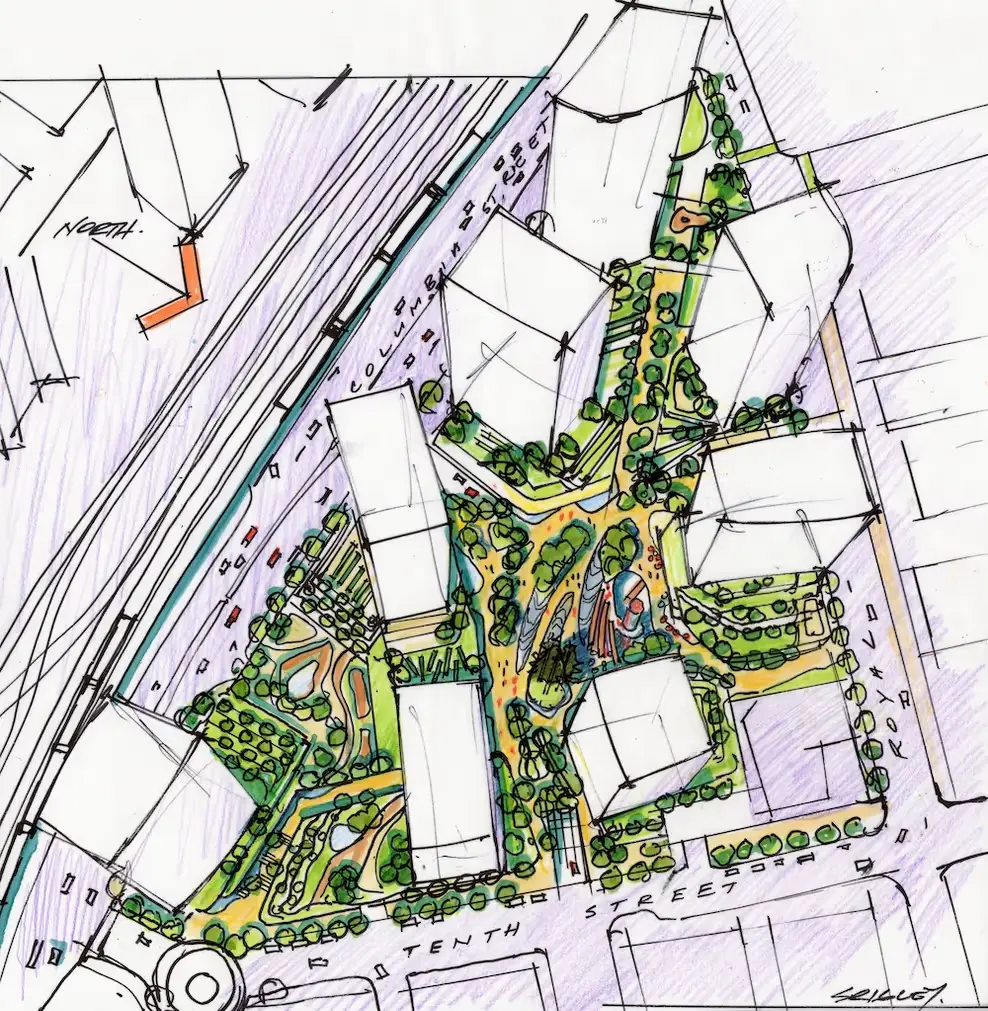
The most transformative single development project in New Westminster right now is Edgar Development's Columbia Square redevelopment at 88 Tenth Street, a 7.1-acre open-air shopping centre sitting directly west of New Westminster SkyTrain Station. Council approved the master plan in October 2024, and the project is now in the pre-development phase.
The approved plan calls for eight high-rise towers reaching up to 53 storeys, with over 3,800 new homes. The mix includes 800 secured purpose-built market rental homes, 160 secured below-market rental homes, and thousands of strata market ownership homes. The project will also include commercial space, childcare, public space, and a site for a new school. As a condition of the approval, Edgar agreed to a precedent-setting community contribution of approximately $100 million, including a $60 million density bonus charge and $30 million in DCCs.
Full buildout is expected to take 10 to 15 years. If you're assessing land values or development potential anywhere in the vicinity of New Westminster Station, this project is effectively setting the new benchmark for what is achievable nearby.
Jay's Take:
This is a major benchmark for development around New Westminster Station. The important number is not only the $100 million contribution, but that Council supported towers up to 53 storeys in this location. If you are reviewing a nearby site, older assumptions about achievable height may no longer be enough.
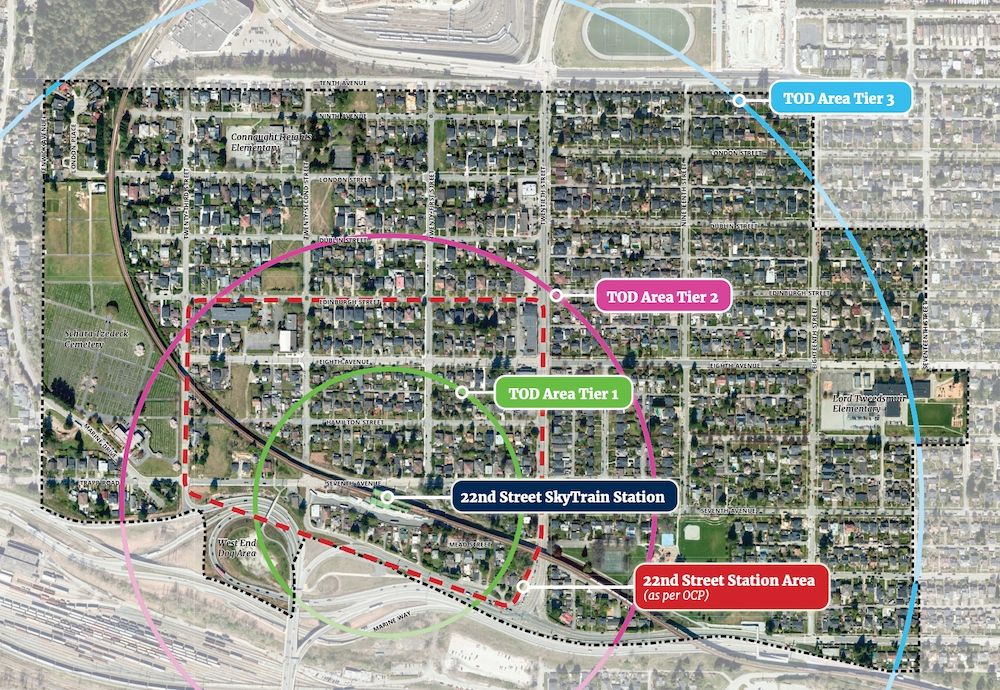
The area around 22nd Street SkyTrain Station is subject to one of the city's most ambitious long-range plans. The reGENERATE vision, endorsed by Council in December 2024, is now moving into implementation — Council approved the work plan for that phase in August 2025. The plan envisions 30,000 new residents in an area roughly the size of Hastings Park in Vancouver. The implementation work is running from 2025 through mid-2027 and involves transportation planning, updates to development cost charge tools, creation of a Transit Village development concept, and design guidelines for future buildings.
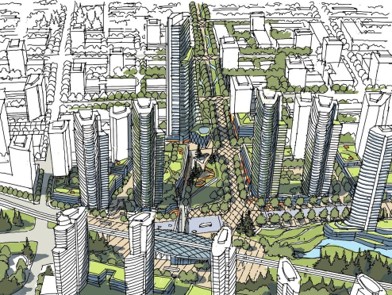
The March 2026 OCP amendments also expanded the FTDA (Frequent Transit Development Area) boundary around 22nd Street, so the density allowed in the station's immediate catchment area is now higher by law. The city has been explicit that this station area is expected to undergo a character change, shifting from the industrial and low-density residential land uses currently there to a mixed residential and employment community built around transit.
If you own industrial or low-density residential land within a few blocks of 22nd Street Station, the policy direction is clear. Development applications in this area are going to face more complexity than a standard TOD site because of the mixed land use ambitions and the infrastructure funding work still underway, but the long-range trajectory is firmly toward higher density.
Jay's Take:
The long-term potential around 22nd Street is significant, but this is still an early-stage planning area. The City has said that many applications may be premature until its transportation, infrastructure funding, and design work is further advanced. It is worth watching now, but do not underwrite the full vision as though it can be approved today.
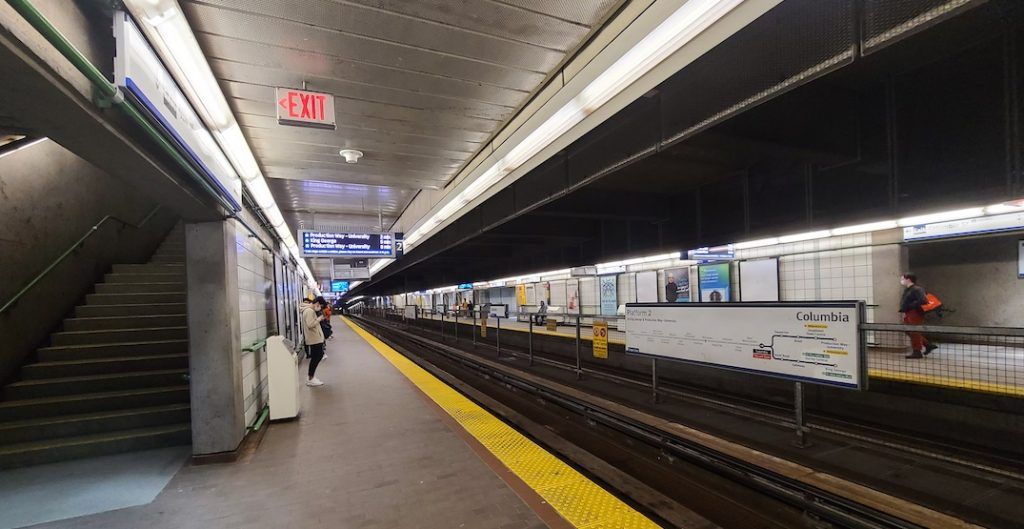
The Columbia SkyTrain station, which sits between New Westminster Station and 22nd Street Station on the Expo Line, is widely acknowledged to have serious accessibility and capacity problems. The 37-year-old station was built with a layout that relies heavily on stairs, has limited elevator coverage, and has platforms too narrow to comfortably handle growing passenger loads. TransLink has commissioned a feasibility study to look at widening platforms and improving transfers, and has described this as "the most technically challenging station upgrade project we've ever taken on."
TransLink purchased the Boucher Centre, the adjacent commercial building, in 2021, and has engaged Perkins&Will to design the upgraded site. The feasibility study is expected to wrap up this year, though no construction timeline has been announced.
If you hold land near Columbia Station, the improvement of this node matters. A more accessible, higher-capacity station supports the case for density at nearby sites, but the timeline is uncertain. Don't price a Columbia Station upgrade into your pro forma until there is a funded capital plan.
Jay's Take:
Buying the neighbouring property shows that TransLink is taking the station constraints seriously. An upgraded station could improve the case for nearby density, but there is still no confirmed construction timeline.
Sources
City of New Westminster - Infill Housing Accelerator Program:
https://www.newwestcity.ca/infillhousing
Be Heard New West - Our City, Our Homes:
https://www.beheardnewwest.ca/en-CA/projects/ourcityourhomes
City of New Westminster - Upcoming OCP Updates:
https://www.newwestcity.ca/planning-building-and-development/new-westminsters-official-community-plan/upcoming-updates
City of New Westminster - Transit Oriented Development Areas:
https://www.newwestcity.ca/new-provincial-housing-legislation/transit-oriented-development-areas
Daily Hive - 8 towers for 7,000 residents approved for New Westminster strip mall site:
https://dailyhive.com/vancouver/columbia-square-new-westminster-edgar-development-plan-approved
STOREYS - Transit-Oriented Developments Set To Usher In A New New Westminster:
https://storeys.com/new-westminster-transit-oriented-develoments/
City of New Westminster - 22nd Street Station Area Bold Vision:
https://www.newwestcity.ca/planning-building-and-development/new-westminsters-official-community-plan/ocp-implementation-projects/22nd-street-station-area-bold-vision
Daily Hive - Plan to add 30,000 residents at SkyTrain station:
https://dailyhive.com/vancouver/skytrain-22nd-street-station-transit-oriented-development-new-westminster
CBC News - Upgrading Columbia SkyTrain station is most technically challenging retrofit:
https://www.cbc.ca/news/canada/british-columbia/columbia-skytrain-station-upgrades-9.7190173
Daily Hive - TransLink planning overhaul of SkyTrain Columbia Station:
https://dailyhive.com/vancouver/translink-overhaul-skytrain-columbia-station
Freshet News - Resistance is futile, New Westminster infill housing:
https://www.freshetnews.ca/infill-housing-options-coming-to-new-west-neighbourhoods/
Thinking about how these changes affect your project? Jay Jung Architect Inc. works with developers, builders, and property owners across Metro Vancouver. Reach out at jjarch.ca or email jay@jjarch.ca.


